$3,000.00 off any sunroom, screened room, 4-season room, or addition.
Free Ring Motion Detector w/Camera with every deck, sunroom, screened room, 4 season room, or addition.
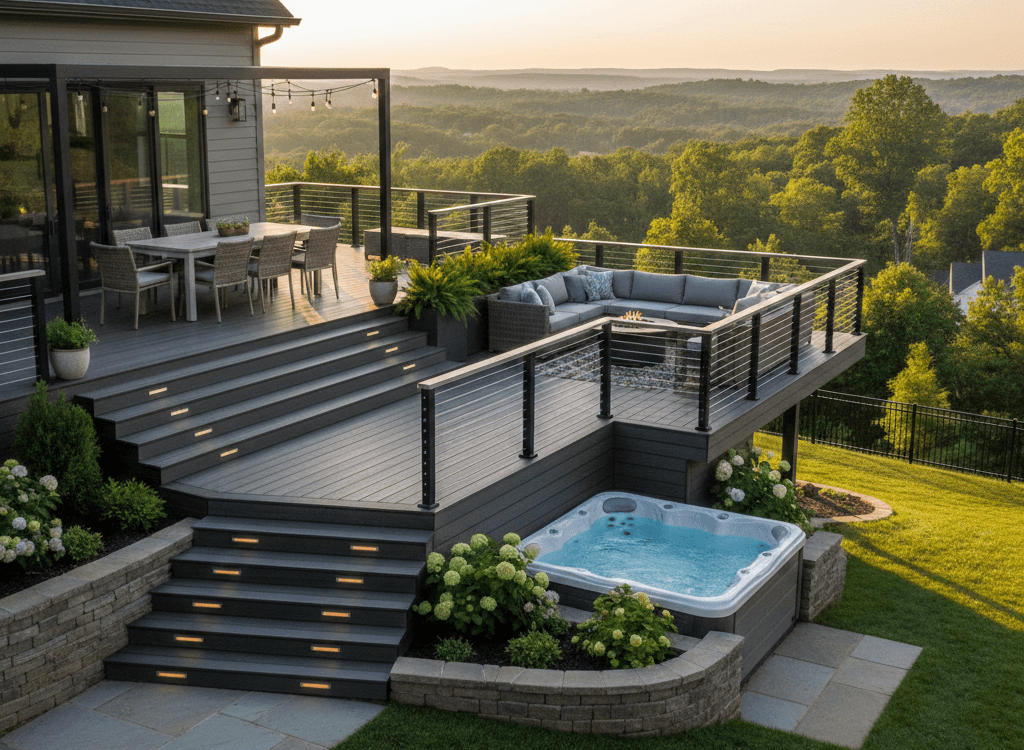
A multi-level deck offers a dynamic, elegant way to enhance your outdoor living space—especially if your property has a slope or you want to separate areas for dining, lounging, or entertaining. But before you dive into building, it’s important to understand what goes into the design, planning, and construction process.
From structural requirements and zoning laws to material choices and layout flow, here’s everything you should know before building a multi-level deck, especially if you’re planning it for your Tennessee home.
A multi-level deck features two or more connected platforms at different heights. These levels are typically linked by steps or short staircases and may include distinct zones—like an upper dining space and a lower lounge or hot tub area.
Multi-level decks are ideal for:
Sloped or uneven yards
Homes with elevated entrances or walkout basements
Creating defined spaces for specific activities
Enhancing views or adding architectural interest
Before choosing a design, you need to assess your property. A sloped yard often benefits the most from a tiered deck because it allows each level to follow the natural contour of your land.
Is your yard flat, sloped, or terraced?
Where are the sunniest and shadiest spots?
How much privacy does each area offer?
💡 Pro Tip: Use the slope to your advantage—place a hot tub or lounge area on a lower level and a grill or dining zone on the upper.
In Tennessee (and most U.S. regions), building a multi-level deck involves permits, inspections, and zoning compliance. Working with a licensed contractor ensures everything is up to code.
Height restrictions for decks
Railing requirements for elevated levels
Footing and structural support regulations
Setback limits from property lines
💡 Pro Tip: American Services of TN handles all permits and inspections so you don’t have to worry.
Think about how you’ll use each level of your deck. Multi-level decks are all about functional separation and smooth transitions between areas.
Upper level: Dining area or outdoor kitchen
Mid-level: Lounge with seating and fire feature
Lower level: Hot tub, pool access, or garden path
Keep traffic patterns open and logical
Use wide, shallow steps between levels for comfort
Add built-in benches or planters for space-saving functionality
💡 Pro Tip: Incorporate lighting on steps and railing caps for safety and ambiance at night.
The materials you select will affect not only the look and feel of your deck but also its lifespan and maintenance needs.
Pressure-treated wood: Cost-effective and widely used but requires sealing/staining.
Composite decking: Durable, low-maintenance, and available in multiple colors/textures.
PVC decking: Resists moisture and mold—great for humid Tennessee summers.
Metal or cable railings: Provide a sleek, modern aesthetic with clear sightlines.
💡 Pro Tip: Use different textures or colors on each level for subtle visual separation without clashing.
Multi-level decks blend beautifully with natural surroundings when landscaping is part of the plan. You can soften hard lines, add privacy, and guide foot traffic.
Planting beds between deck levels
Stone pathways connecting lower levels to the yard
Shade trees or pergolas over seating zones
Privacy screens made from hedges, bamboo, or decorative panels
💡 Pro Tip: Incorporate drainage solutions to protect against runoff between levels.
Multi-level decks require more framing, footings, and railings than single-level decks. They’re a bigger investment—but one that pays off in style, versatility, and home value.
Excavation or grading costs (if needed)
Structural reinforcements (especially for hot tubs)
Railings, staircases, and transitions
Lighting, pergolas, and built-ins
💡 Pro Tip: Ask your contractor for a line-item estimate so you understand where your investment goes.
Even if you’re starting small, plan with the future in mind. A good design will allow you to expand or add features later, such as:
A screen room or covered section
An outdoor kitchen or bar
A built-in fireplace or heater
An integrated speaker system or smart lighting
💡 Pro Tip: Conduits for electrical or plumbing can be installed in advance even if you don’t use them right away.
A multi-level deck transforms your outdoor living area into a tiered oasis of relaxation, entertainment, and beauty. Whether you’re accommodating a sloped yard or simply looking to elevate your space, these decks offer unmatched style and functionality when done right.
By considering your layout, materials, flow, and long-term goals, you’ll be better prepared to create a structure that looks like it was always meant to be there.
At American Services of TN, we design and build custom multi-level decks that blend seamlessly with your home and landscape. From concept to completion, we’ll guide you every step of the way—with quality craftsmanship, honest pricing, and a focus on long-term durability.
📞 Fill out the form below to schedule your free consultation today. Let’s bring your dream deck to life!